Design2 min read
Simple Guide to Space Elevators
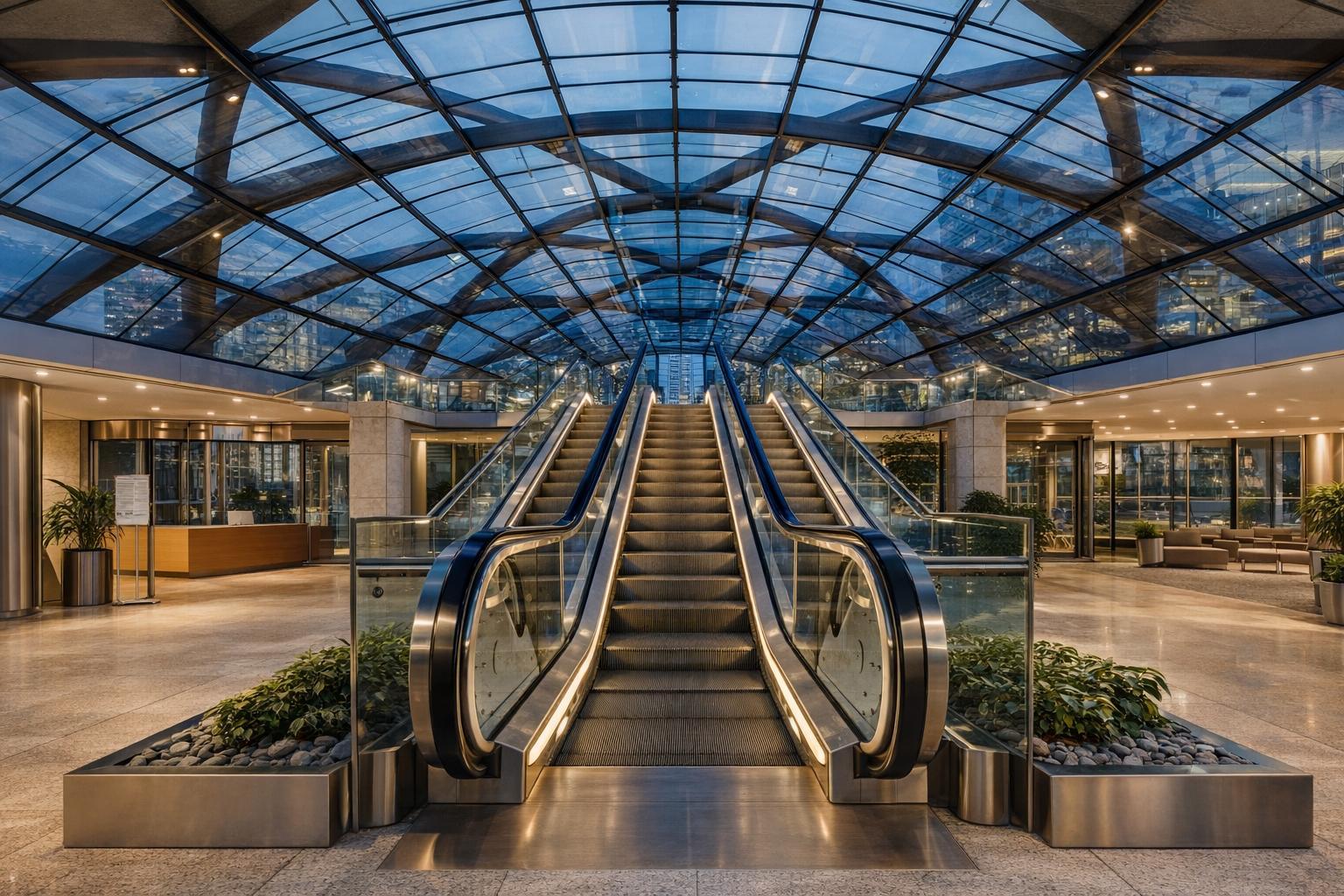
A space elevator is a proposed transportation system connecting the Earth's surface to space. The elevator would allow vehicles to travel to orbit or space without the use of rockets. While elevator travel would not be quicker than rocket travel, it would be much less costly and could be used to carry cargo and potentially passengers on a continuous basis.
Konstantin Tsiolkovsky first described a space elevator in 1895. Tsiolkovksy proposed building a tower from the surface up to geostationary orbit, essentially making an incredibly tall building. The issue with his concept was that the whole weight above it would crush the structure. Modern space elevator ideas are based on a distinct principle— tension. The elevator would be constructed using a cable connected at one end to the surface of the Earth and at the other end to a huge counterweight above the geostationary orbit (35,786 km).
Gravity would pull downward on the cable, while centrifugal force from the orbiting counterweight would pull upward. The opposing forces would reduce the stress on the elevator, compared with building a tower to space.
While a normal elevator uses moving cables to pull a platform up and down, the space elevator would rely on devices called crawlers, climbers, or lifters that travel along a stationary cable or ribbon. In other words, the elevator would move on the cable. Multiple climbers would need to be traveling in both directions to offset vibrations from the Coriolis force acting on their motion.
NASA says the basic concept of a space elevator is sound, and researchers around the world are optimistic that one can be built. The Obayashi Corp., a global construction firm based in Tokyo, has said it will build one by 2050, and China wants to build one as soon as 2045. Now an experiment to be conducted soon aboard the International Space Station will help determine the real-world feasibility of a space elevator.
Of course, making a suitable tether is just one hurdle that must be overcome. Another is space debris — bits and pieces of rockets and spacecraft that orbit Earth and could damage or destroy a space elevator if they smash into it.
Reach us at cooper elevators for more information about elevators.